


After the Kona Low storm earlier this spring and the Hurricane Lala last week, a lot of homeowners across Hawaiʻi are unfortunately dealing with water damage. Wind-driven rain came through doors and windows, roofs leaked, and some homes experienced significant flooding.
But it doesn't take a hurricane. Broken pipes, backed-up drains, leaking appliances, roof leaks, and exterior flooding can all put a surprising amount of water onto your floor. For those living in condos, leaks from units above are another common occurrence.
One of the first questions people ask us is whether their flooring can be saved. Sometimes it can. It depends on how much water there was, how long it sat, what kind of flooring you have, and whether it made its way underneath.
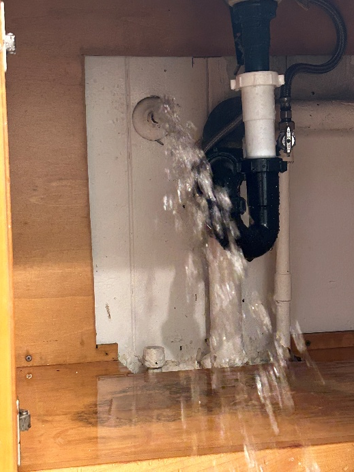
Under-Sink water leak at my house in 2023
Start with the water damage, not the floor
For anything more than a small amount of water that was cleaned up right away, document the damage with pictures and video and contact your insurance company.
Your insurer can explain your coverage and claims process and connect you with a professional remediation company if needed. Coverage varies by policy and by the source of the water, so ask questions before making assumptions.
Moisture can travel underneath flooring or into surrounding building materials, where it may remain trapped. Mold can begin growing on wet materials within 24 to 48 hours, so getting everything properly dried is important.
A remediation company can use moisture meters, thermal imaging, and other equipment to determine where moisture has traveled.
Dehumidifiers and drying equipment may be enough in some situations, while carpet, flooring, and other materials that can't be adequately dried may need to be removed.
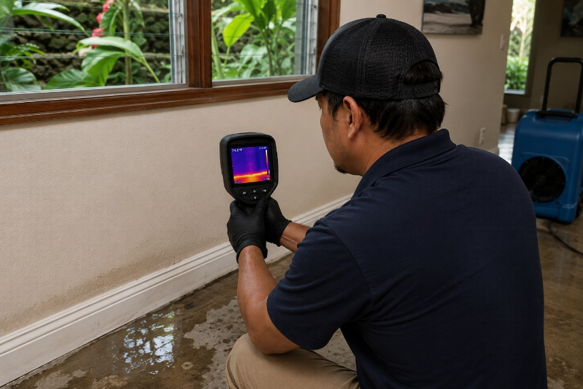
A sewer backup is a different situation
There's an important difference between potable water from a broken supply line and contaminated water from a sewer backup, leaking waste pipe, or overflowing toilet.
If sewage may be involved, don't treat it like an ordinary leak. The water can contain bacteria and other contaminants, and materials that might otherwise be dried and reused may need to be discarded.
We strongly recommend leaving the cleanup and decisions about what can be safely salvaged to a qualified remediation professional.
Does the flooring need to come out?
Not necessarily, but if water sat for an extended period, reached the perimeter of the room, or seeped underneath the flooring, have it assessed rather than assuming everything is dry.
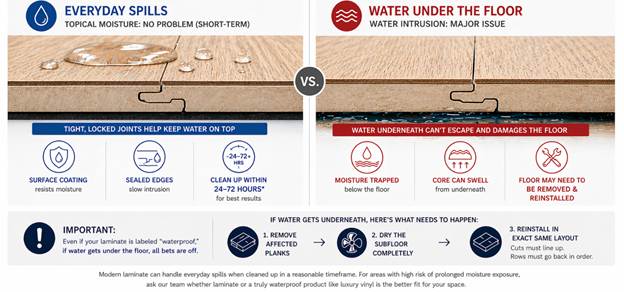
What happens next depends on the floor:
Laminate typically has a wood-fiber core. If it absorbs enough water, it can swell around the joints and edges, and some of that deformation may be permanent.
Today's water-resistant and waterproof-rated laminates handle everyday spills much better than older products, but water can still get around the perimeter and underneath the floor.
Hardwood absorbs and releases moisture, so a wet floor may cup, swell, buckle, or otherwise change as it takes on water.
That doesn't necessarily mean it needs to be torn out immediately. Depending on the amount of water and how the floor was installed, it may be possible to dry it and allow the wood to stabilize before deciding what needs to be replaced.
Waterproof luxury vinyl is probably where we see the most confusion. When LVP is advertised as “waterproof”, that refers to the flooring itself, not the entire flooring system. Water can still travel around the perimeter or through other openings and become trapped underneath. If that happens, some or all of a floating floor may need to come up so the area underneath can be properly dried.
The good news is that some floating LVP can be saved. If the damage is limited, the planks may be carefully disassembled, the area underneath dried and treated, and the flooring reinstalled. If you want to try to save it, tell the remediation crew before demolition begins. The locking edges need to be handled carefully, and the planks should ideally be kept organized. Pieces cut around walls, doors, and cabinets may only work in their original locations. Having some extra material also helps.
Tile itself generally handles water well, particularly when installed directly over concrete. But water can still affect walls, cabinets, baseboards, and adjoining flooring. Tile installed over plywood or other assemblies can present different concerns. The important question isn't just whether the tile got wet. It's where the water went.
Don't forget the walls and baseboards
Water reaching the perimeter of a room can soak into baseboards, drywall, cabinets, and other porous materials. It can also wick upward beyond the area that was visibly wet.
Some materials can be dried in place; others may need to be removed. A remediation professional can test moisture levels and determine what's necessary.
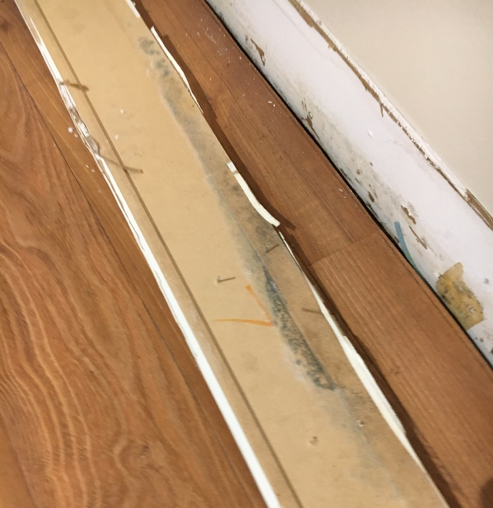
Mold growth behind a wallbase after a flood
Understand what your insurance is actually paying for
When you receive an initial insurance estimate, don't assume you’re limited to the flooring allowance shown.
Ask your adjuster how the benefit was calculated and whether your policy provides actual cash value or replacement-cost coverage. Depending on your policy, additional reimbursement may be available after you replace the floor and submit your invoices or receipts.
Here in Hawaiʻi, also make sure the estimate reflects actual local replacement costs, including freight and shipping. If the allowance seems low compared with local quotes, ask whether you can submit a supplier or contractor estimate for review.
If you'd like to upgrade, ask about that too. Insurance may cover a comparable replacement and allow you to pay the difference for the floor you actually want.
Every policy and claim is different, so confirm the details with your insurance company before purchasing.
Choosing your replacement floor and finishing the project
Once you understand what your insurance will cover, you can start choosing your replacement flooring. If the floor has to come out anyway, this can be an opportunity to make a change you've been thinking about, whether that's a different color, better performance, or simply something you like more.
Flooring is usually one of the last things to go back in, after drywall, painting, cabinetry, and other repairs are completed. Every project is different, though, so coordinate the timing with your contractor and flooring installer.
If you already have an installer, we're happy to work with them. If you don't, we can connect you with a trusted flooring installer once your home is ready for flooring.
Have a flooring question? Give us a call.
During Hurricane Lala, I was up at 4am mopping water out of my bedroom and living room so I know firsthand how stressful it is when water suddenly gets into your home.
If you're dealing with a flood or leak and aren't sure what to do with your floors, give us a call. Whether you’re on O’ahu or on one of the neighbor islands, tell us what happened and we'll help you figure out what to do from there.
— Lance


